

The Definitive Guide to Custom Patches: Types, Materials, and Technical Specifications
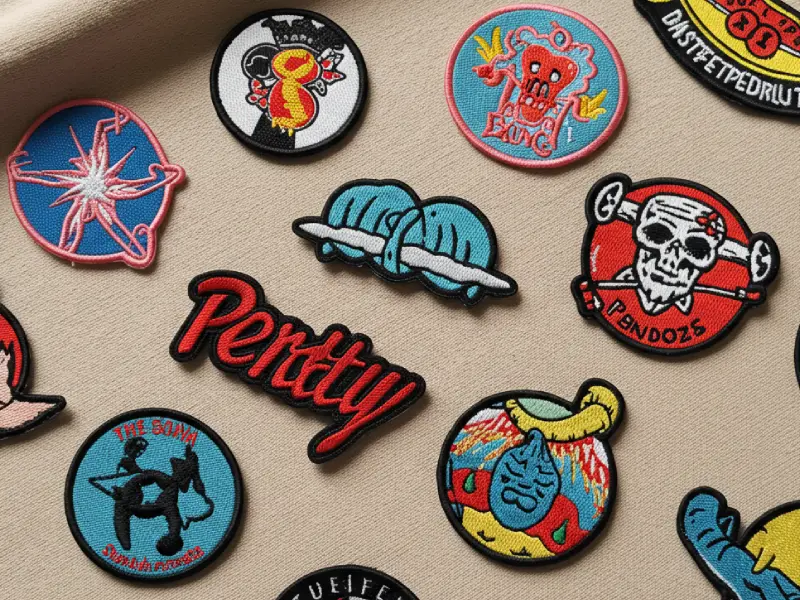
Custom patches have evolved from simple utilitarian identification into a primary tool for brand identity, fashion expression, and organizational unity. Whether used for military uniforms, corporate branding, or streetwear, the quality of a patch relies heavily on choosing the right material, backing, and border execution.
This guide provides a technical breakdown of custom patch categories, manufacturing standards, and the critical role of artwork preparation.
What Are Custom Patches?
A custom patch is a piece of insignia or artwork, typically created on a fabric or rubberized base, designed to be attached to clothing or accessories. Unlike direct embroidery, patches are standalone items that offer versatility in application and placement. They serve as tangible representations of authority, membership, or brand aesthetic.
Primary Types of Custom Patches
Selecting the correct patch type depends on the design’s complexity, the durability required, and the intended visual texture.
1. Embroidered Patches
The most traditional and recognizable style. Embroidered patches use rayon or polyester threads stitched onto a twill substrate.
- Best For: Uniforms, sports teams, and classic branding.
- Key Feature: High texture and a classic “3D” feel due to thread thickness.
- Design Constraint: Not ideal for tiny text or gradients; stitches require a minimum surface area to remain legible.
2. Woven Patches
Woven patches are created by weaving threads together to form the fabric and the design simultaneously (similar to a clothing label), rather than stitching onto a background.
- Best For: Intricate designs, small text, and detailed logos.
- Key Feature: Smooth, flat surface with no raised texture.
- Durability: Excellent, as the design is integral to the structural integrity of the patch.
3. PVC (Polyvinyl Chloride) Patches
Made from a soft, rubberized plastic material, PVC patches are molded rather than stitched.
- Best For: Tactical gear, outdoor equipment, and modern streetwear.
- Key Feature: Waterproof, weather-resistant, and capable of true 3D layering (where elements physically pop out).
- Durability: The most durable option available; will not fray, fade, or absorb moisture.
4. Chenille Patches
Known for their fuzzy, carpet-like texture, these are created using vaulted yarn.
- Best For: Varsity jackets and retro collegiate apparel.
- Key Feature: High-profile texture that feels soft to the touch; primarily used for large letters or simple mascots.
5. Leather Patches (Genuine & Faux)
These patches utilize laser etching or debossing to imprint a design onto leather material.
- Best For: Hats (specifically beanies and trucker caps), denim, and heritage brands.
- Key Feature: Offers a rugged, premium aesthetic that develops a patina over time.
Technical Anatomy: Borders and Backings
The longevity of a patch is often determined by how its edges are finished and how it is adhered to the garment.
Border Types
- Merrowed Border: A heavy, overlocked stitch that wraps around the edge of the patch. This is the industry standard for symmetrical shapes (circles, squares, shields) and prevents fraying.
- Laser Cut (Hot Cut) Border: The edge is cut and sealed simultaneously by a laser. This is required for patches with complex, irregular shapes where a merrowing machine cannot turn the sharp corners.
Backing Options
- Iron-On (Heat Seal): Features a heat-activated adhesive. Useful for casual application but less durable than sewing for heavy-wash items.
- Velcro (Hook & Loop): Consists of a hook side (on the patch) and a loop side (on the garment). Standard for military and tactical applications requiring quick removal.
- Plastic Backing: A stiff layer added to sew-on patches to prevent the patch from bunching or losing shape over time.
- Peel-and-Stick: A temporary adhesive for events or manufacturing positioning; not for permanent wear.
The Foundation: From Vector to Production
The physical quality of any patch is entirely dependent on the digital file used to create it. Manufacturing machines cannot interpret standard image files (like JPG or PNG) directly.
The Role of Vector Art
For PVC, Printed, and Leather patches, the design must be converted into Vector Art. This uses mathematical paths rather than pixels, ensuring that lines remain crisp and scalable regardless of the patch size.
The Role of Digitizing
For Embroidered and Woven patches, the artwork must undergo Digitizing. This is a specialized process where a skilled digitizer converts the artwork into a stitch file (such as .DST or .PES). This file tells the machine exactly where to place the needle, the angle of the stitch, the thread density, and the trim commands.
Note: Without precise vectoring or digitizing, a patch will suffer from poor registration, illegible text, and structural weakness.